
Top 5 Tested Affordable Yeti Alternatives in 2026
- Mar 13
- 4 min read
Updated: Mar 17
Published: 13th March 2026
RTIC, Coleman, Grizzly and Electric Cooler Backpacks - Are They Worth It?
If you're an outdoor enthusiast, you've probably heard of Yeti coolers.
They're practically the benchmark brand in outdoor cooling equipment: rugged, durable, excellent ice retention, and professional design. But there's a obvious problem - the price is very high.
A small Yeti hard cooler often costs over $300, and a soft cooler with straps can approach $500.
Many people ask:
Are there alternatives with similar performance but more friendly prices?
To find the answer, I tested 5 highly popular Yeti alternative products on the market, ranging from traditional hard coolers to new electric cooler backpacks.
Below are my real experiences and recommendations.
My Top 4 Criteria for Choosing Yeti Alternatives
When selecting cooling equipment, I focus on these core factors:
🛡️ Durability - Rugged build to withstand bumps from camping, fishing, and beach use.
❄️ Ice Retention - All-day cold retention for food & drinks – the core cooler performance metric.
🎒 Portability - Easy to carry; excess weight turns even large capacity into a burden.
🏷️ Price - Budget-friendly Yeti alternatives with excellent cost-performance.
Product Reviews
1. RTIC Hard Cooler: The Most Affordable Yeti Alternative
RTIC is arguably the brand most frequently compared to Yeti.
The reason many outdoor enthusiasts love it is simple:
Structure and performance close to Yeti, but at half the price.
Test Experience
I tested the RTIC 65-quart hard cooler.
In outdoor conditions at 86°F (30°C):
Still had significant ice remaining on day three
Cooler body is extremely sturdy
Can stand on it without issues
Pros
Excellent ice retention
Very sturdy construction
Great value for money
Cons
Relatively heavy
Not convenient to move when full
If you're doing car camping or extended outdoor activities, RTIC is arguably the closest alternative to Yeti.

2. Coleman Soft Cooler: Affordable and Practical
Coleman is a very classic outdoor brand.
I tested the 16-can soft cooler, which costs just over $30.
Test Experience
Its advantages are very obvious:
Lightweight
Affordable price
Convenient for everyday use
Ice retention is approximately 6-8 hours, suitable for:
Park picnics
Short beach activities
Half-day trips
Best For
If you only use a cooler occasionally, Coleman is sufficient.

3. Grizzly Hard Cooler: Rugged and Durable Workhorse
Grizzly also has an excellent reputation in the hard cooler field.
Some models are made in the USA with very solid construction.
Test Experience
I tried the Grizzly 40-quart model:
Cooler body is very thick
Seal is very tight
Ice retention is very close to RTIC
In outdoor conditions, it can maintain ice for 3-5 days.
If you care about quality and durability, Grizzly is an excellent choice.

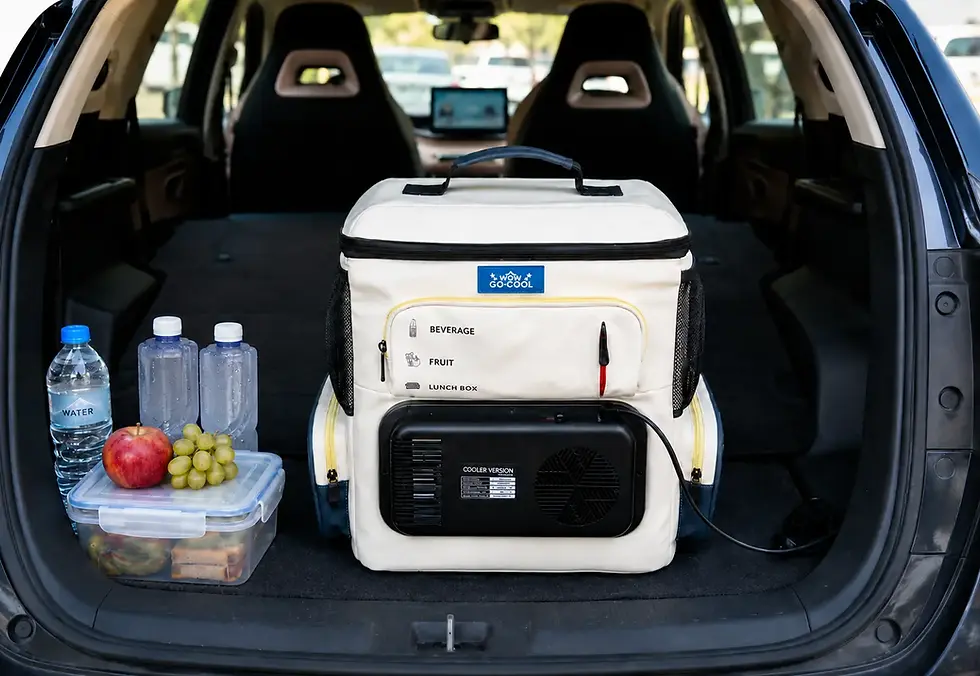
4. WowGooCool Electric Cooler Backpack: Innovative Solution Without Ice
This is a product completely different from traditional coolers.
It doesn't need ice - instead, it uses electricity for active cooling.
How It Works
It uses semiconductor refrigeration technology and needs to connect to a 12V power source:
Car cigarette lighter
Portable power station
When powered, it can:
Cool to 0°C (32°F)
Heat to 60°C (140°F)
Test Experience
Weight:Only 5.5 lbs (approx. 2.5kg), much lighter than traditional hard coolers.
Cooling Speed:At 25°C (77°F) ambient temperature, the air vent reaches 32°F (0°C) in approximately 20 minutes with no load.
Things to Note:
To be realistic, let me also mention its drawbacks:
Must be connected to power to work
Current version cannot precisely adjust temperature
After power loss, cold retention only up to 8 hours compare with traditional insulated coolers
Best For
It's more suitable for:
Car or Truck camping
Music festivals
Beach trips
Fishing activities
If you don't want to carry heavy coolers or prepare ice, this electric cooler backpack will be very convenient.

5. Standard Backpack Cooler (Non-Electric)
The last type is the traditional backpack-style cooler.
This product has no electric function, relying entirely on thick insulation layer + ice.
Test Performance
In outdoor conditions at 86°F(30°C): Can maintain low temperature for 12-15 hours
Advantages
No power source needed
Lightweight
Consistent ice retention time
If you're hiking or camping without power access, this traditional backpack cooler is more reliable.
Recommendations by Scenario
Usage Scenario | Recommended Typ |
|
|
|
|
|
|
|
|
Frequently Asked Questions
Q: Can affordable coolers really replace Yeti?
A: Many brands' ice retention capabilities are already close to Yeti, they just don't have the brand premium.
Q: Which Yeti alternative brand is most worth buying?
A: RTIC, Coleman, and Grizzly are all well-reviewed options.
Q: Is an electric backpack cooler worth buying?
A: If you frequently travel by car or need lightweight equipment, an electric cooler backpack is an interesting and practical choice.
Conclusion
Yeti is indeed an excellent cooler brand, but it's not the only choice.
There are now many alternative products on the market with good performance and more reasonable prices:
RTIC
Coleman
Grizzly
Backpack Coolers
The most important thing is to choose based on your usage scenario, not just the brand.
Finding the cooling equipment that suits you can truly make every outdoor trip more enjoyable.


Comments