
Do Backpack Coolers Really Work? A Realistic Guide for Outdoor Use!
Updated: Mar 12
Do Backpack Coolers Really Work?
Backpack coolers have become one of the fastest-growing pieces of outdoor gear in recent years. You’ll see them used for camping trips, beach outings, hiking adventures, and even everyday activities like grocery shopping.
But many people still wonder:
Do backpack coolers actually work, or are they just a marketing gimmick?
The short answer is Yes—backpack coolers do work, but their performance depends on the type of cooling technology used and how they are used outdoors.
In this guide, we’ll explain how backpack coolers work, what realistic performance looks like, and when they are worth buying.
What Is a Backpack Cooler?
A backpack cooler is a portable cooler designed to be worn on your back like a backpack. Instead of carrying a heavy cooler by hand, the weight is evenly distributed across your shoulders and back.
Backpack coolers are commonly used for:
Truck and Road trips
Camping trips
Hiking adventures
Beach days
Picnics and outdoor events
Their main advantage is mobility and convenience.
Passive vs Active: Which Cooling Type Should We Choose?
Not all backpack coolers work the same way. There are two main categories.
1. Passive Backpack Coolers (Ice-Based)
These are essentially insulated bags that rely on ice or frozen packs.
How they work:
Insulated bag + ice packs. Slows heat, but ice melts over time.
Real-world performance:
Keeps drinks cold for 2–4 hours in hot weather.
Ice melts → water leaks → soggy food.
Cooling fades as ice disappears.
Pros: Cheap, no power, lightweight.
Cons: Short cooling, messy, needs ice refills.
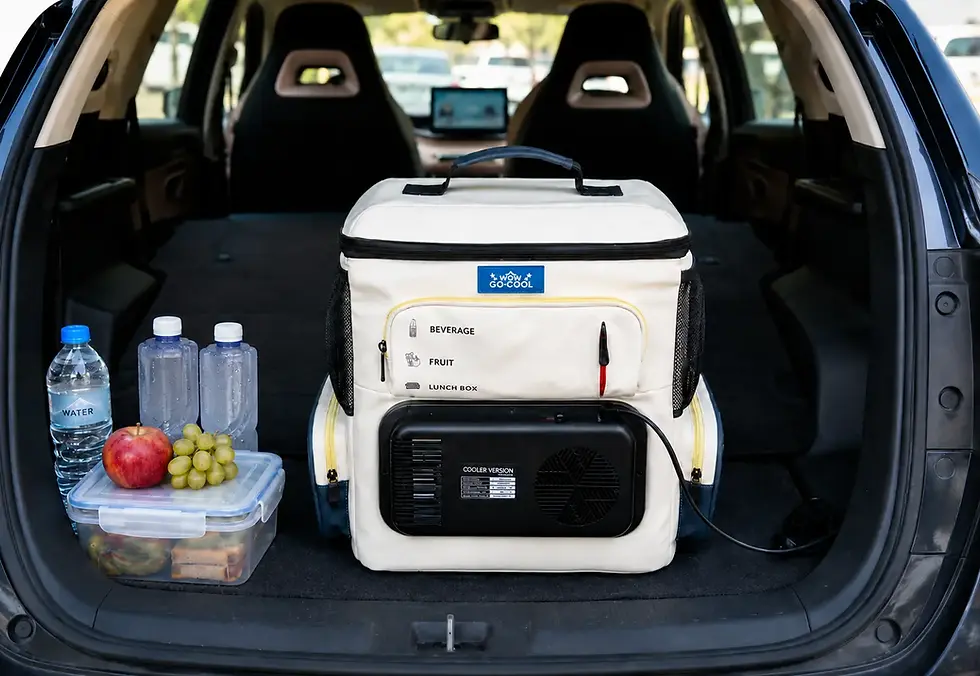
2. Electric Backpack Coolers (Active Cooling)
Electric backpack coolers use powered cooling technology instead of ice.
How they work:
Powered by Car Charging/Power Station/AC Adaptor→ actively removes heat from inside.
Maintains steady temperature(cooling/heating) without ice.
Real-world performance:
l Keeps drinks cold all day, even in 90°F heat
l No water mess, interior stays dry.
l Temp. stays consistent as long as power lasts.
Pros: Consistent cooling, no ice, dry, works in high heat.
Cons: Power required

How Cold Can a Backpack Cooler Get?
The actual temperature depends on the model and environmental conditions.
What most electric backpack coolers can do:
Most brands can keep contents 50–59°F cooler than the outside temperature
Only a very few models can truly cool down to 39°F
With continuous power, food and drinks stay refreshingly cold all day
While they won't freeze items like a household freezer, they are highly effective for keeping drinks cold and food fresh during day trips.

Do Backpack Coolers Work for Camping?
Yes—backpack coolers can work very well for camping, especially for short trips or mobile campsites.
Traditional hard coolers are useful for large groups, but they can be bulky and difficult to carry long distances.
Backpack coolers offer several advantages:
Hands-Free Carrying
Because they are worn like backpacks, users can hike or walk comfortably without carrying a heavy cooler by hand.
Mobility
They are ideal for situations where you move frequently, such as:
Walking along the beach
Exploring outdoor festivals
Consistent Cooling
Electric backpack coolers maintain stable temperatures without relying on ice.
Real Situations Where Backpack Coolers Work Best
Backpack coolers are particularly effective in situations where mobility and convenience matter most.
Outdoor Festivals
Hands-free portability makes it easier to move through crowds while still keeping drinks chilled.
Beach Days
Sand & heat can melt ice quickly. Active cooling help keep beverage refreshing through the day.
Day Camping
For short outdoor trips, a backpack cooler can replace bulky hard coolers.
RV Trips
A backpack style cooler allows RV lovers to enjoy ice-cold drinks anytime, anywhere—without giving up an ounce of comfort.

What Backpack Coolers Are Not Designed For
Although they are extremely useful, backpack coolers are not meant to replace every cooling solution.
Backpack style coolers may not be ideal for:
Multi-day camping trips without power
Large group food storage
Situations requiring freezing temperatures
For those scenarios, traditional hard coolers or portable refrigerators may still be better.
Why Campers Are Switching to Electric Backpack Coolers
Outdoor enthusiasts are increasingly choosing electric backpack coolers because they solve several long-standing camping problems.
No More Melted Ice
One of the biggest frustrations with traditional coolers is constantly replacing ice.
Active cooling eliminates this issue.
Cleaner Storage
Without melting ice, food packaging stays dry.
Lightweight and Portable
Modern designs prioritize mobility, which is essential for outdoor adventures.
Some models from WowGooCool focus specifically on balancing cooling performance with lightweight design, making them easier to carry during outdoor activities.
Final Verdict: Do Soft Backpack Coolers Really Work?
Yes, backpack coolers do work—and they can be incredibly useful for outdoor adventures.
However, the key is choosing the right type.
Passive coolers are suitable for short trips and casual outings.
Electric backpack coolers provide more consistent cooling and eliminate the need for ice.
If your goal is mobility, convenience, and reliable cooling, a well-designed electric backpack cooler can significantly improve your outdoor experience.
FAQ
Do electric backpack coolers need ice?
No. Electric backpack coolers use powered cooling systems to maintain temperature, so ice is not required.
How long can a backpack cooler stay cold?
Ice-based coolers stay cold until the ice melts.
Electric backpack coolers can maintain temperature as long as they have power.
Are backpack coolers good for truck travel or road trip?
Yes. Backpack coolers are designed for mobility, making them ideal for hiking, beach trips, and other outdoor activities.


Comments